





Hantavirus Infection
 What is hantavirus?
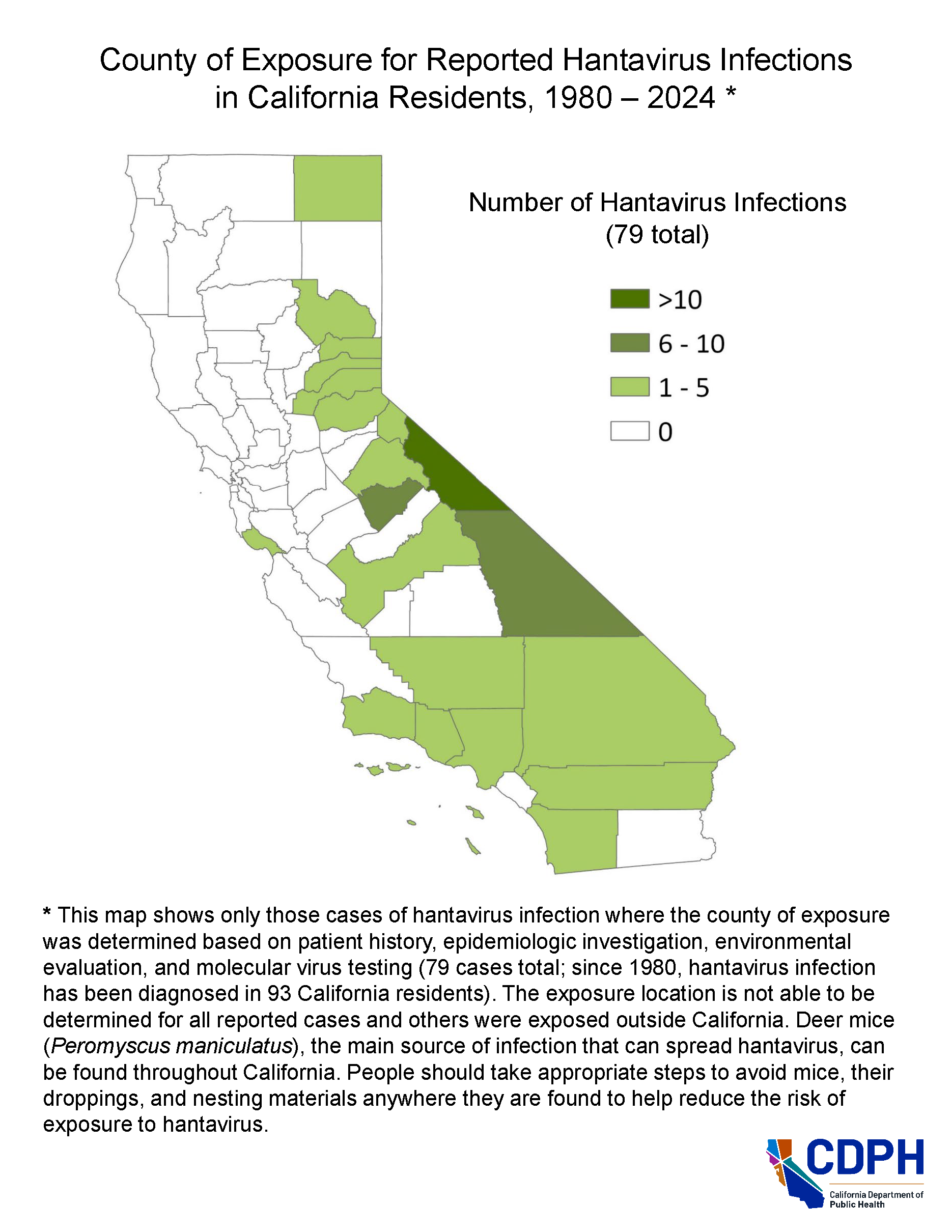
Hantavirus is a virus that spreads through the urine, droppings (poop), or saliva of wild rodents, including deer mice, which are common in many parts of California. Hantavirus can cause serious disease in humans.
How can a person become infected with hantavirus?
People can become infected with hantavirus when they breathe in air that is contaminated with the virus. Particles containing hantavirus get into the air when dried mouse urine, saliva, or droppings are stirred up. The chances of this happening increase when opening or cleaning buildings in rural areas that have been closed for the winter where deer mice have entered, or for people working, playing, or living in closed spaces where mice are present.
Symptoms of hantavirus infection can be mild or severe, depending on whether a person's lungs become infected. There is no specific treatment for hantavirus infection, but early medical care can help if serious disease develops.
How can I help prevent hantavirus infection?
Because hantavirus infection can be serious, even deadly, it is important to know how to prevent it. The best way to prevent hantavirus infection is to keep wild rodents, especially mice, out of your home, workplace, cabin, shed, car, camper, or other closed space:
Seal up holes (the width of a pencil or larger) and other openings where mice can get in
Place snap traps to catch any mice (do not use glue traps or live traps)
Store all food items in rodent-proof containers to keep mice away
Learn more: How to Seal Up to Prevent Rodents
If you find signs of mice or other rodents, it's important to clean up after them safely to reduce your chances of getting sick:
Before you start cleaning
Gather the proper supplies, including rubber or plastic gloves and a disinfectant or bleach solution made from a mixture of household bleach and water
Air out the space you will be cleaning for 30 minutes
While cleaning
Spray the contaminated area with the disinfectant or bleach, and let it sit for at least 5 minutes
Use paper towels, a sponge, or mop to clean up the contaminated area
Important!
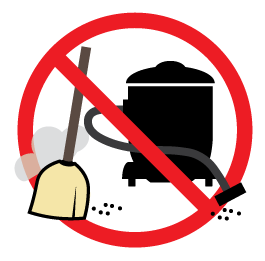
If you are cleaning an area that may be contaminated with live or dead mice, mouse droppings, or mouse nests, DO NOT sweep or vacuum the area. This can stir up droppings or other materials contaminated with hantavirus into the air.
What is hantavirus pulmonary syndrome?
Hantavirus pulmonary syndrome (HPS) is one kind of disease that can result from hantavirus infection. HPS is the main hantavirus disease of concern in the U.S. HPS is caused by the Sin Nombre virus, which is a specific type of hantavirus in the western U.S., including California. Although it is rare, HPS can be very serious and deadly. Symptoms of HPS are similar to other respiratory infections, including fever, headache, muscle aches, and difficulty breathing. Symptoms usually develop weeks after breathing in air contaminated by infected deer mice. There is no specific treatment or cure for HPS, and death is possible, but early medical care can increase the chance of survival.
If you have a fever, difficulty breathing, and have been exposed to rodents or rodent-contaminated materials, talk to a healthcare provider right away and tell them about your recent exposure to rodents (especially mice).
- About Hantavirus – U.S. Centers for Disease Control and Prevention (CDC)
- CDC Clinical Overview of Hantavirus
- CDC Controlling Wild Rodent Infestations
- Hantavirus Infections among Overnight Visitors to Yosemite National Park, California, USA, 2012 – Emerging Infectious Diseases, Volume 20, Number 3—March 2014
- Hantavirus in California – An Interactive Story Map – November 2021
Key Messages for Reducing Hantavirus Risks
Click an image to view and download (right-click and select "Save image as").
| If you need to clean out an area where rodents have made a nest, be careful not to stir up dust or droppings. Deer mice in California can be infected with hantavirus, which can spread to people through the air. Learn more: https://www.cdph.ca.gov/Programs/CID/ DCDC/pages/hantaviruspulmonarysyndrome.aspx |
|
| Before cleaning an area infested by mice, air out the space for 30 minutes. Then use a mop or sponge and a freshly made 10% bleach solution to clean the area. Wear gloves while cleaning, and consider wearing a respirator (face mask) if cleaning heavily infested areas. Learn more: https://www.cdc.gov/healthy-pets/rodent-control/clean-up.html |
|
| Buildings and cabins that have been closed for the winter or other long periods can be home to mice and other rodents. Deer mice can be infected with hantavirus, which can be spread to people through the air in closed spaces. If you need to clean an area contaminated with mouse droppings or nests, follow these steps: https://www.cdc.gov/healthy-pets/rodent-control/clean-up.html |  |
| Before you open a building that’s been closed for a long time, air out the space for 30+ minutes and clean only with a wet mop or sponge. Sweeping or vacuuming stirs up mouse droppings and other rodent-contaminated materials that can spread hantavirus in the air. Learn more: https://bit.ly/PreventHPSAtWork |
|


