





Bird flu
En Español: Para obtener información sobre la influenza aviar en Español, visite nuestra página de gripe aviar.
Current Bird Flu Situation
The current risk to the public remains low.
-
No person-to-person spread of bird flu has been detected in California.
-
People rarely get bird flu, but those who interact with infected dairy cows, poultry, or wildlife have a greater risk of infection.
-
Pasteurized milk and dairy products are safe to consume. Pasteurization inactivates the bird flu virus.
-
CDPH is working to protect public health related to bird flu. We monitor infection data, evolving science, and the people affected. Our knowledge will change as we learn more. We are committed to reducing the impact to those at highest risk.
Human Cases in California
|
Confirmed Human Cases
|
|---|
| 38 |
The last human case reported in California was on January 14, 2025.
California has 1 additional probable case with dairy cow exposure that meets the
Council of State and Territorial Epidemiologists (CSTE) probable case definition (PDF). That case tested positive by a local lab and confirmatory testing at CDC was negative.
Confirmed human case summary during the 2024 outbreak, by exposure source.
|
Cattle |
Poultry |
Unknown |
Total |
|---|---|---|---|
| 36 |
0 |
2 |
38 |
Contact Us
If you have any questions, comments or concerns,
submit an inquiry.
If you’re a member of the media and have a question for CDPH, email Media@cdph.ca.gov.
What is Bird Flu?
Bird flu, also known as avian influenza A (H5N1) or highly pathogenic avian influenza (HPAI), is caused by a virus that can cause serious illness and death in birds and mammals. Human infections with bird flu viruses are rare, but they can happen when the virus gets into a person's eyes, nose, mouth, or when inhaled.
What are the symptoms of bird flu in humans?
- Eye redness or discharge
- Cough
- Sore throat
- Runny or stuffy nose
- Diarrhea
- Vomiting
- Muscle or body aches
- Headaches
- Fatigue
- Trouble breathing
- Fever (100°F or higher)
- Pneumonia
- Seizures
Symptoms can be serious and lead to death.
Who is at higher risk of getting bird flu?
People who work with or are around animals infected with bird flu or raw milk are at higher risk. This includes any contact with animal fluids, feces, feathers, or their environments.
Those at higher risk include:
Farmworkers who:
- Work with dairy cows
- Work with poultry
- Handle raw dairy products
- Work in slaughterhouses
- Work in hatcheries
Wildlife Workers
- Wildlife rehabilitation center staff and volunteers
- Pest management and animal removal personnel
- Animal control officers and shelter staff
- Zoo staff and volunteers
Other groups
- Slaughterhouse workers
- Rendering plant workers
- Live bird market workers
- Veterinary clinic staff
- Persons with sick backyard flocks
Wildlife workers, please see Bird Flu: Working with Wildlife (PDF, 2.3MB) for more information.
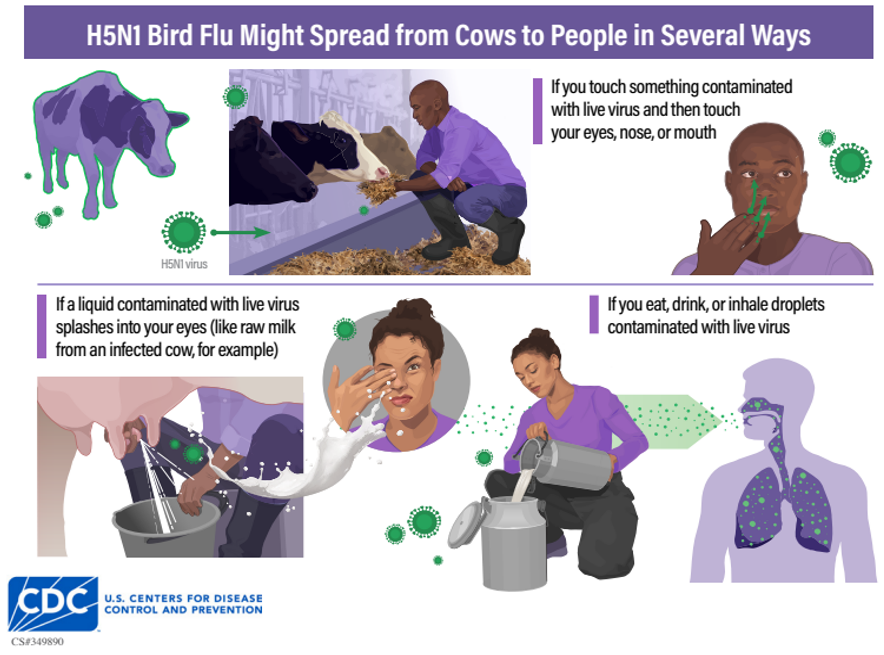
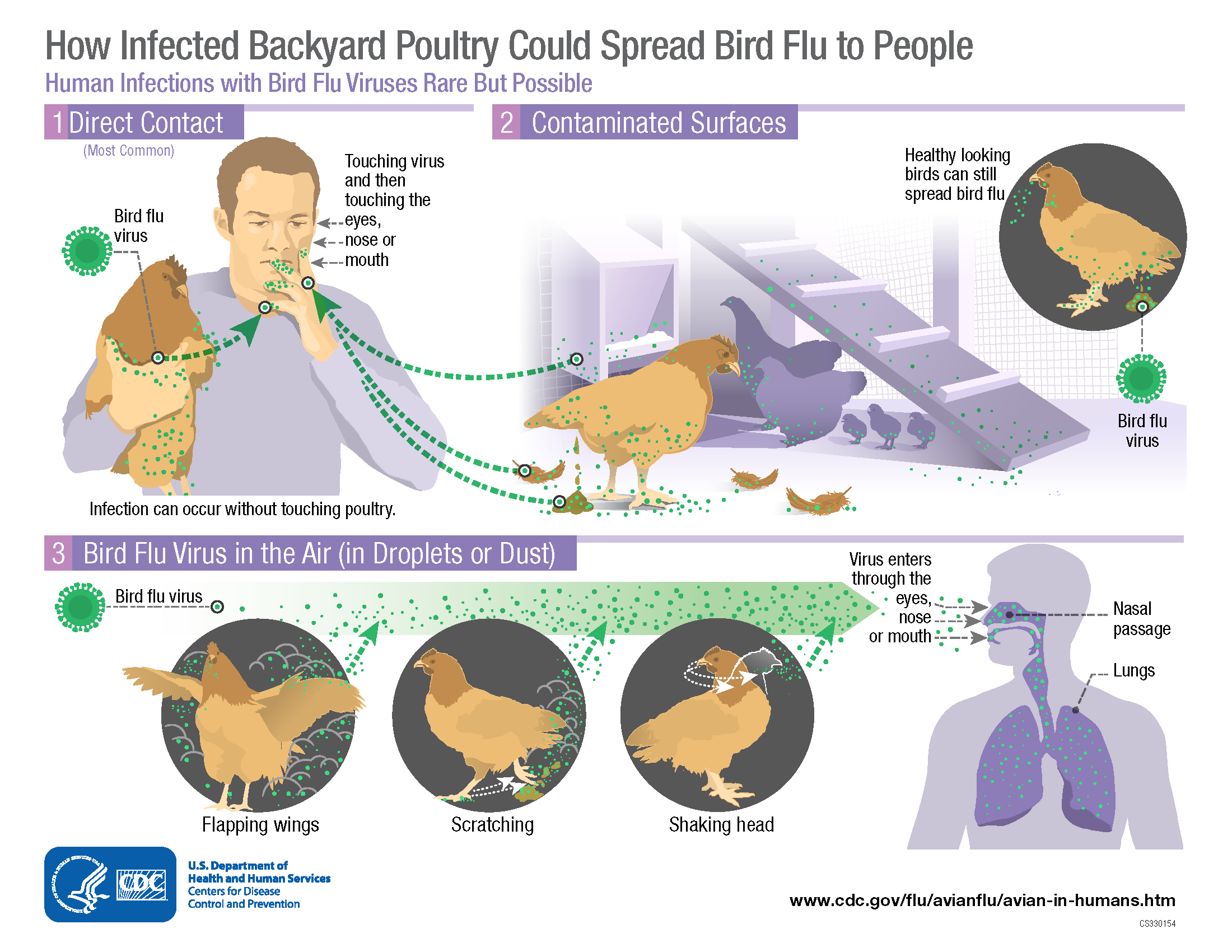
How does bird flu spread?
It spreads from sick cows, birds, or other infected animals to people by:
- Breathing in dust or droplets with the virus.
- Splashing raw milk from an infected cow in your eyes, nose or mouth.
- Touching your eyes, nose or mouth with unwashed hands after:
- Touching raw milk, cow or bird feces, or other contaminated items or surfaces.
- Handling sick or dead animals infected with the virus.
- Drinking raw milk.
 How do I avoid getting bird flu?
-
Avoid contact with infected animals. Avoid direct contact with birds and other animals that could be infected with bird flu. Wild birds can be infected with bird flu even if they don't look sick.
-
Get the seasonal flu vaccine. CDPH recommends that all Californians, especially workers at risk for exposure to bird flu, receive a seasonal flu vaccine. While the seasonal flu vaccine will not protect against bird flu, getting vaccinated can lower the risk of being infected with both seasonal flu and bird flu at the same time. Getting vaccinated also reduces the chance of severe illness from seasonal flu.
-
Only consume pasteurized dairy products. The bird flu virus can be present in raw, unpasteurized milk. Unpasteurized milk may contain other germs that can make you sick. Do not touch or consume raw milk or raw milk products. Pasteurized milk and dairy foods are safe to eat.
-
Cook poultry and eggs to an internal temperature of 165°F. There is no evidence that humans can get bird flu through properly prepared poultry and eggs cooked to the correct temperature. The chance of infected poultry or eggs entering the retail market is low. There are safeguards like testing of flocks and federal inspection programs. This makes it unlikely an infected bird or eggs from an infected bird will reach consumers.
How do I protect myself?
If you must have contact with birds, cows, cats, other animals or their environments, wear recommended personal protective equipment (PPE) and take extra precautions.
This includes:
- Wearing PPE
- Goggles or face shield
- NIOSH® approved respirator
- Gloves
- Coveralls
- Head cover
- Boots
- Working outdoors or in well-ventilated indoor environments.
- Washing your hands after contact with animals or their environments and before taking breaks or eating/drinking.
- Avoiding touching your eyes, nose and mouth with unwashed hands.
- Avoiding kissing or putting birds, or other animals suspected to have bird flu near face.
- Wearing dedicated work clothing and footwear and washing them to keep on-site if possible.
- Changing clothes and footwear and showering after work.
- Monitor yourself and family members for signs of influenza-like illness for 10 days after last contact with an ill animal. Report any illness to your health care provider.
See Worker Protection from Bird Flu (PDF, 1.9MB) for more information.
What if I have symptoms of bird flu?
- Tell your employer right away.
- Contact your
local public health department right away to arrange for testing and treatment. Tell them you may have been exposed to bird flu.
- When testing, you may get a few swabs taken. If you have an eye infection, an eye swab may be taken. In exposed persons with eye infections, eye swabs are most likely to detect bird flu.
- For information about worker rights, such as workers compensation or paid sick leave, visit CalOSHA's What Workers Need to Know About Bird Flu.
See Guidance for People with Possible or Confirmed Bird Flu Infection for specific information about what to do if you have symptoms of bird flu.
Bird Flu in California
- CDPH has been closely monitoring the bird flu situation in both animals and humans since the state's first detection in poultry in 2022.
- CDPH has provided PPE for dairy farm workers and others handling raw dairy products, as well as slaughterhouse and poultry farm workers.
Resources
CDPH
-
Worker Protection from Bird Flu (PDF)
-
Bird Flu: Working with Wildlife (PDF, 2.3MB)
- Do animals where you work have bird flu? (PDF)
-
How to Request Personal Protective Equipment
-
Raw Milk and Raw Dairy Products
-
Bird Flu Communications Toolkit
Cal/OSHA
-
Protection from Avian Influenza
- Bird Flu Fast Facts for Workers (PDF)
-
Bird Flu Fast Facts for Employers (PDF)
- Bird Flu Fast Facts for Employers (Hmong, PDF)
-
Bird Flu Fast Facts for Employers (Punjabi, PDF)
- What Workers Need to Know About Bird Flu (PDF)
- What Workers Need to Know about Bird Flu (Hmong, PDF)
- What Workers Need to Know about Bird Flu (Punjabi, PDF)
CDFA
- H5N1 Bird Flu Virus in Livestock
- What to Expect if You Suspect Bird Flu in Your Herd (PDF, 1.2MB)
- Avian Influenza (Bird Flu) (PDF)
- Bird Flu in Livestock Questions and Answers (PDF)
UC Davis
National Center for Farmworker Health
CDC
- Avian Influenza (Bird Flu)
- Reducing Risk for People Working with or Exposed to Animals
- Avian Influenza (Bird Flu) Resources
- Interim Guidance for Employers to Reduce Exposure to Avian Influenza A Viruses (Such as H5N1) for People Working with Animals | Bird Flu
USDA
- 2022–2024 Detections of Highly Pathogenic Avian Influenza
- Understanding and Reducing the Risk of H5N1 Avian Influenza in Petting Zoos 2024
- Animal Care Guidance for Zoos and Captive Wildlife Facilities: Protecting Birds From Highly Pathogenic Avian Influenza (PDF)