





CHILDHOOD LEAD POISONING PREVENTION BRANCH
TYPES OF CERTIFICATION
(Visite esta página en Español)
The type of certificate you should get depends on the type of lead-related construction activities you plan to do. CDPH certification is now required for all those doing lead hazard evaluations, lead abatement plan preparation, lead abatement work, and lead clearance inspections for residential and public buildings in California (Title 17, CCR § 35001-35050 and § 36000-36100).
Make sure you have completed the required training, experience, and education before applying for a Lead Certificate. More information on eligibility and training is provided in the application forms and instructions or by calling the Lead-Related Construction Information Line at 1-800-597-LEAD (1-800-597-5323) (Outside California, dial 510-620-5694.)
Inspector/Assessor (I/A) Certificate
The I/A certificate is for those who plan to inspect buildings for lead and assess the type of lead hazards in those buildings. This may include:
- Taking paint chip, dust, or soil samples or using an XRF machine to test painted surfaces
- Conducting visual inspections to examine the condition of painted surfaces and the location of lead hazards in the building
- Interpreting laboratory and XRF test results
- Preparing reports on the amount of lead hazards in a building and the risks of lead poisoning to the building occupants
- Recommending cost effective ways to safely handle the lead hazards
- Ensuring no lead hazards remain after lead abatement work or other construction work where lead is present
Under California's Title 17 regulations, a certified Inspector/Assessor
- May perform lead hazard evaluations, including:
- Lead paint inspections
- Lead risk assessments
- Clearance inspections.
- May not prepare lead abatement plans
- May not perform lead abatement activities
Sampling Technician (ST) Certificate
The ST certificate is for those who, under the direction of an Inspector/Assessor, perform sampling activities. This may include:
- Taking paint-chip, dust or soil samples
- Using an XRF machine to test painted surfaces
- Performing visual assessments
Under California's Title 17 regulations, a certified Sampling Technician
- May take samples during a lead hazard evaluation under the direction of a certified Inspector/Assessor
- May not prepare lead abatement plans
- May not perform lead abatement activities
- May not perform full lead hazard evaluations, including clearance inspections
Project Monitor (PM) Certificate
The PM certificate is for those who plan to oversee lead-related construction work to ensure that specifications are followed. This may include:
- Working with consultants, industrial hygienists, journeymen, engineers and housing specialists to develop the project specifications
- Performing air monitoring to assess exposure levels and dust wipe sampling to ensure adequacy of containment
- Conducting clearance testing at the end of the project to see if any lead contamination remains
- Checking work activities for compliance with Federal, State and local regulatory requirements
Under California's Title 17 regulations, a certified Project Monitor
- May prepare lead abatement plans
- May conduct clearance inspections
- May not perform lead abatement activities
- May not supervise individuals performing lead abatement activities
- May not perform lead hazard evaluations except for clearances
Supervisor Certificate
The Supervisor certificate is for those who plan to supervise daily work activities on a lead-related construction work site and/or prepare lead abatement plans. These certificates are also for those who plan to supervise repainting or general construction performed on surfaces painted with lead-based paint. This may include:
- Overseeing workers who are performing the activities specified in a lead abatement work plans. (Supervisors also perform lead-related construction work activities themselves).
- Enforcing the work practices that ensure worker safety and protect occupants from lead poisoning
- Scheduling and coordinating work site activities with building occupants as well as other consultants and contractors
- Arranging for proper disposal of lead-containing waste created during work activities
Under California's Title 17 regulations, a certified Supervisor
- May perform lead abatement activities
- May supervise individuals performing lead abatement activities
- May prepare lead abatement plans
- May not perform lead hazard evaluations, including clearance inspections
Worker Certificate
The Worker certificate is for those who plan to do lead abatement activities
under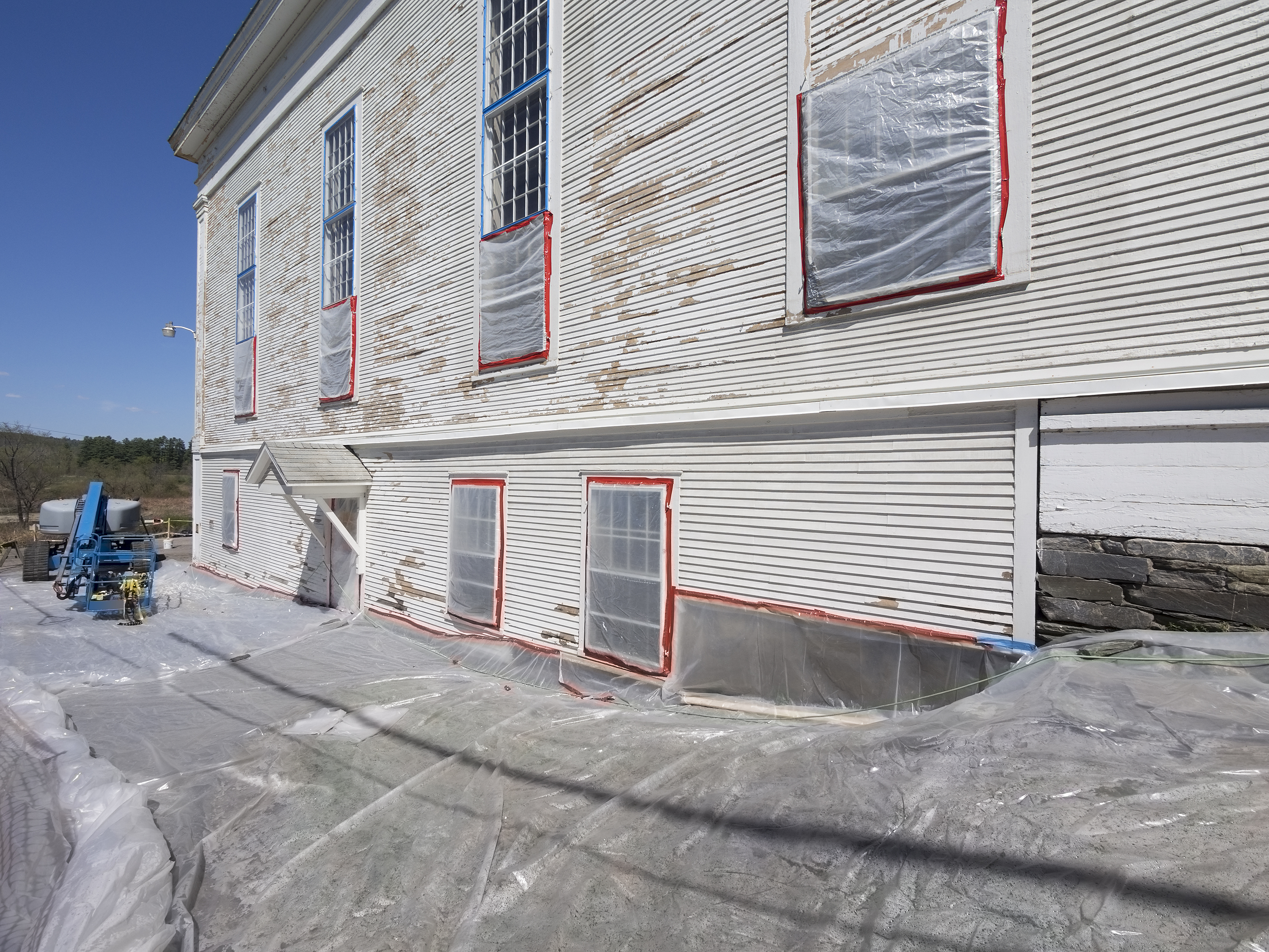 the direction of a supervisor. These certificates are also for those who
plan to do repainting or general construction on surfaces painted with
lead-based paint. This may include:
the direction of a supervisor. These certificates are also for those who
plan to do repainting or general construction on surfaces painted with
lead-based paint. This may include:
- Building containment structures and sealing off work areas to prevent lead dust from spreading
- Removing, enclosing, or covering lead-based paint hazards or lead-contaminated soil
- Preparing lead-contaminated waste for disposal and cleaning up the work area
Under California's Title 17 regulations, a certified Worker
- May perform lead abatement activities
- May not prepare lead abatement plans
- May not perform lead hazard evaluations, including clearance inspections
Lead Certification Requirements
The table below shows which types of activities certified lead Inspector/Assessors, Sampling Technicians, Project Monitors, Supervisors, and Workers may do under California's Work Practice Standards for Lead-Related Construction (Title 17, California Code of Regulations, Sections 36000 and 36100). Please note that these regulations apply only to work done in residential and public buildings. Please also refer to the key definitions below for details about what these types of activities include:
| do lead abatement work? | prepare lead abatement plans? | perform lead hazard evaluations? | perform clearance inspections? | |
Can a certified Inspector/Assessor | ||||
Can a certified Sampling Technician | ||||
Can a certified Project Monitor | ||||
Can a certified Supervisor | ||||
Can a certified Worker |
Key Definitions
The following definitions are provided for guidance only. They do not contain exact language from California's lead work practice standards.
- Abatement - Any set of measures designed to reduce or eliminate lead hazards or lead-based paint from residential or public buildings. Abatement does not include containment or cleaning activities.
- Clearance Inspection - An on-site limited investigation, performed according to U.S. Department of Housing & Urban Development (HUD)guidelines, to determine if lead hazard control work has been completed as specified and if the work area is safe for unprotected workers, residents, and children to enter. Does not include personal air monitoring activities done to ensure Cal/OSHA compliance, representative sampling of components removed from a building to determine the applicability of hazardous waste requirements, or sampling done to determine adequacy of containment.
- Lead Hazard Evaluation - An on-site inspection, risk assessment and/or clearance inspection, done for pay or other compensation, to determine the presence or amount of lead-based paint or lead hazards in a residential or public building. Does not include personal air monitoring activities done to ensure Cal/OSHA compliance, representative sampling of components removed from a building to determine the applicability of hazardous waste requirements, or sampling done to determine adequacy of containment.
- Lead Hazards - Deteriorated lead-based paint, lead-contaminated dust, lead-contaminated soil, lead-based paint that is disturbed without containment or any other nuisance which results in persistent measurable lead exposure. Lead hazards include all paint or surface coatings on residential or public buildings built before January 1, 1978, that are disturbed without containment. (Such surface coatings are presumed to contain lead.)