





Dengue
What is dengue?
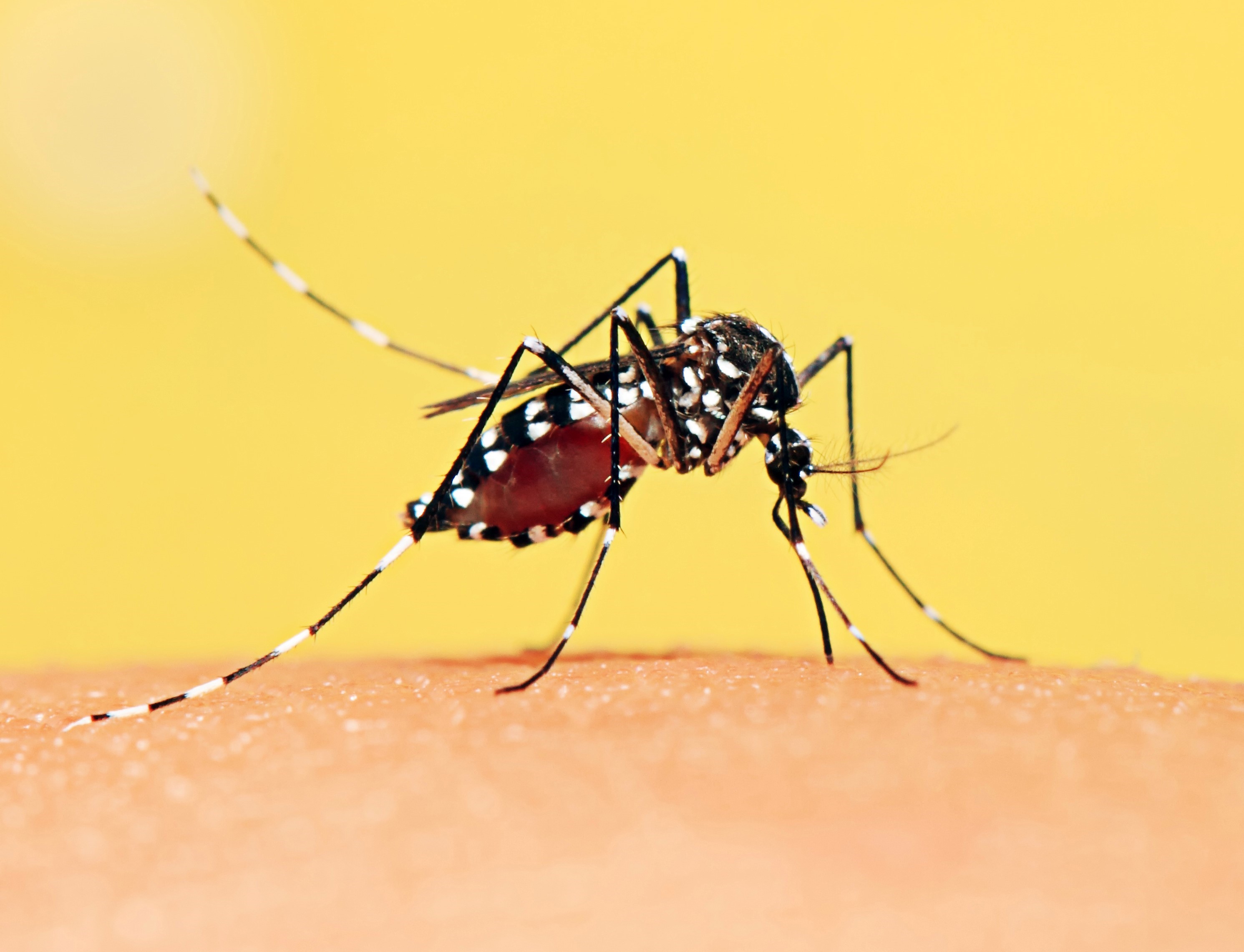
Dengue (den-gee) is a disease caused by any one of four dengue viruses that are spread by mosquitoes. The mosquitoes that spread dengue are called
Aedes aegypti and
Aedes albopictus. These
Aedes mosquitoes live in many parts of the world. Up to
400 million people are infected with dengue virus every year. In California, cases of dengue are most often reported in people who traveled to other parts of the world where dengue is common.
Where is dengue common?
Dengue is common in many tropical and nearby areas of the world where Aedes mosquitoes thrive. These areas include:
-
 Latin America and the Caribbean
 - U.S. territories, including Puerto Rico and American Samoa
- South Asia / Indian subcontinent
- Southeast Asia and the Pacific Islands
People who travel to these areas should be aware of dengue and know that it spreads from mosquitoes in these areas.
How do people get dengue?
 People get dengue from the bite of an infected Aedes mosquito. Dengue virus cannot spread directly from person to person. An Aedes mosquito gets infected when it bites a person who has dengue virus in their blood. About a week after a mosquito bites an infected person, the mosquito is able to transmit the virus to other people when it bites.
Because there are four different strains of dengue virus, a person can get dengue more than once in their life. A person who has had dengue fever before is more likely to get severe dengue if they are infected again.
What are the symptoms of dengue?
Most people (about 3 in 4) who are infected with a dengue virus never develop any symptoms. If a person does get sick with dengue, their symptoms can be mild or severe.
Mild Dengue (or “Dengue Fever”)
The most common symptom is fever and can also include any of the following:
- Headache
- Pain behind the eyes
- Muscle pain
- Joint and bone pain
- Rash
Dengue fever symptoms usually last 2–7 days. Most people get better in about a week.
Severe Dengue
People who have had dengue before, are older than 60, or have a health condition like diabetes are more likely to develop severe dengue.
Severe dengue usually starts with symptoms of dengue fever. However, once the fever starts to go away, signs and symptoms of severe dengue develop within a few hours. The warning signs of severe dengue include:
- Bleeding from the nose or mouth (gums)
- Severe pain in the stomach or abdomen
- Vomiting (at least 3 times in 24 hours)
- Blood in the vomit or stool
Severe dengue causes blood vessels in a person’s body to leak, causing swelling and fluid to build-up in the stomach and around the lungs. If not treated, severe dengue can result in death.

If you have symptoms of dengue, do not take aspirin or nonsteroidal anti-inflammatory drugs (NSAIDs) like ibuprofen. These medicines can increase your risk of bleeding. Take acetaminophen (such as Tylenol) instead to help control fever and pain.
Severe dengue is a medical emergency. If you think you have severe dengue or any warning signs of severe dengue, go to the emergency room immediately. Be sure to tell the doctor or healthcare provider if you have traveled recently or if you have had dengue before.
How can I help prevent dengue?
The best way to prevent dengue is to prevent mosquito bites, especially when traveling in areas of the world where dengue virus is common.
Prevent Mosquito Bites
Learn more about controlling mosquitoes at home
- Use Environmental Protection Agency (EPA)-registered repellent on clothes and exposed skin.
- Wear loose-fitting long sleeves and pants to make it harder for mosquitoes to find a place to bite you.
- Control mosquitoes around your home – Aedes mosquitoes that can spread dengue are found in California.
-
Dump and drain any standing water in and around your home where mosquitoes can breed and develop.
- Report day-biting mosquitoes to your local vector control agency.
Plan for Travel
Before you travel, learn if you are going to an area where there is risk of dengue.
Pack an EPA-registered mosquito repellent to use while traveling.
Pack acetaminophen (such as Tylenol) in case you need to control fever and pain while traveling.

During Travel
- Stay in places with air conditioning (if possible) or window and door screens so you can keep mosquitoes out of the space where you are sleeping.
If staying outdoors or in a place without window/door screens, sleep under a mosquito bed net if available.
After Returning Home
- Even if you don’t feel sick or remember being bitten by mosquitoes while traveling, you may still have been infected and not have any symptoms. Use mosquito repellent and prevent mosquito bites for 3 weeks after returning home. This helps prevent the spread of dengue to mosquitoes in your community.
- CDPH Monthly Update on Number of Dengue Infections in California – Updated on the 1st Friday of the month
- CDPH Map of Aedes aegypti and Aedes albopictus Mosquitoes in California by County (PDF)
- CDPH List of Aedes aegypti and Aedes albopictus Mosquitoes in California by City or Census-Designated Place (PDF)
- CDPH Interactive Map of Invasive Aedes Mosquitoes in California
- CDC Current Dengue Outbreak
- CDC Travel Health Notices
CDPH Dengue fact sheet (PDF) English | Spanish – Updated September 2024
- CDPH Aedes albopictus and Aedes aegypti Mosquitoes webpage
- Aedes Mosquito Bite Prevention poster (PDF) English | Spanish
- CDC Dengue website – U.S. Centers for Disease Control and Prevention
-
CDC Data and Statistics on Dengue in the United States
-
CDC Dengue Communication Resources
- CDPH Guidance for Surveillance of and Response to Invasive Aedes Mosquitoes & Dengue, Chikungunya, & Zika in California (PDF)
- CDPH Operational Checklist for Local Health Departments, Local Vector Control Districts, and California Department of Public Health In the Event of Local Dengue, Chikungunya, or Zika Transmission (PDF) – August 24, 2016
- CDC Public Health Considerations for Dengue