





healthcare-associated infections (hai) program
Preventing Infections is Everyone’s Responsibility
The CDPH HAI program provides expert guidance for preventing healthcare-associated infections via ongoing tracking of infections and educational programs for health care personnel (HCP). Since 2010, CDPH has collected and analyzed data from hospitals on certain healthcare- associated infections defined by California state law. HAI program experts provide assistance to hospitals to improve infection control practices and to keep California residents safe. The HAI Program publishes an annual report of the progress of hospitals in reaching national goals for reduction of HAIs.
What can patients and families do to protect themselves and their loved ones from getting an infection associated with health care?
-
Perform Hand Hygiene
- Hand hygiene is the single most important action to prevent the spread of germs from health care personnel (HCP) to patients, patients to patients, patients to visitors, and visitors to patients
- Hand hygiene is the removal of germs on hands by either washing hands with soap and water or by applying an alcohol-based hand rub on all surfaces of hands
- Patients should perform hand hygiene:
- Before eating
- Before taking medicine
- Before leaving the room for any procedure or activity including physical therapy
- After coming in contact with any body fluid
- After using the restroom, commode, bedpan or urinal
- When visibly dirty
- After shaking hands with HCP or visitors
- Before and after touching wound dressing
- After sneezing or coughing
- Always perform hand hygiene before and after contact with patients whom you are visiting
- Be sure that your HCP perform hand hygiene before touching you or the patient whom you are visiting. It is OK to ask your providers to perform hand hygiene before touching you if you have not seen them clean their hands.
-
Cover your cough
-
Respiratory hygiene and cough etiquette helps to prevent the spread of germs from people with respiratory tract infections
-
Follow instructions and use the supplies provided at entrances to healthcare facilities
-
Cover your mouth and nose (PDF) with a tissue when you sneeze or cough. If you do not have a tissue, sneeze or cough into your upper sleeve, not your hands
-
Dispose of used tissues in a covered receptacle and perform hand hygiene
-
Be a good visitor by following the hospital’s visiting requirements. To protect the patient whom you are visiting as well as other patients and health care personnel
-
Do not visit patients if you have
-
Fever
-
Any symptoms of respiratory tract-infection such as runny nose or cough
-
Diarrhea or vomiting
-
Exposure to someone with a contagious disease such as chickenpox, measles, or whooping cough
-
Receive an influenza vaccine every year and other recommended vaccines (PDF) for your age group
-
When visiting a patient who is on isolation precautions, ask the staff what precautions to take before entering the room
-
If the patient whom you are visiting might have a weak immune system; make sure to ask the staff if there any additional restrictions on visitors
-
Ask about the facility’s policy on children visiting before bringing children to visit a patient.
-
Prepare for procedures
- Before you undergo a procedure such as insertion of a central venous catheter, a urinary catheter, or a surgery, ask your provider what precautions are taken to prevent infection
-
Look at the CDPH website for public reports of selected healthcare-associated infections by hospital
- For more
information about specific healthcare-associated infections, visit the CDPH website
What do hospitals do to keep patients safe and prevent infections associated with healthcare?
-
Hospitals follow prevention recommendations and guidelines from CDC and other professional organizations to prevent infections
-
Health care personnel wear personal protective equipment (PPE), such as gowns, gloves, and masks, when in contact with the blood or body fluids of any patient or with patients who have certain infections that could spread to others
-
Healthcare personnel receive the influenza vaccine every year or wear a mask during flu season in accordance with local public health requirements. You can check to see how many HCP in California hospitals received influenza vaccine each year
-
Healthcare facilities screen visitors for signs of illness before allowing them to visit
-
Health Care Personnel follow guidelines for preventing device-associated and procedure-related infections
-
Hospitals must provide a safe and clean environment
-
Educate patients and families
- You can expect to receive information on infection control practices from the health care personnel at the facility
-
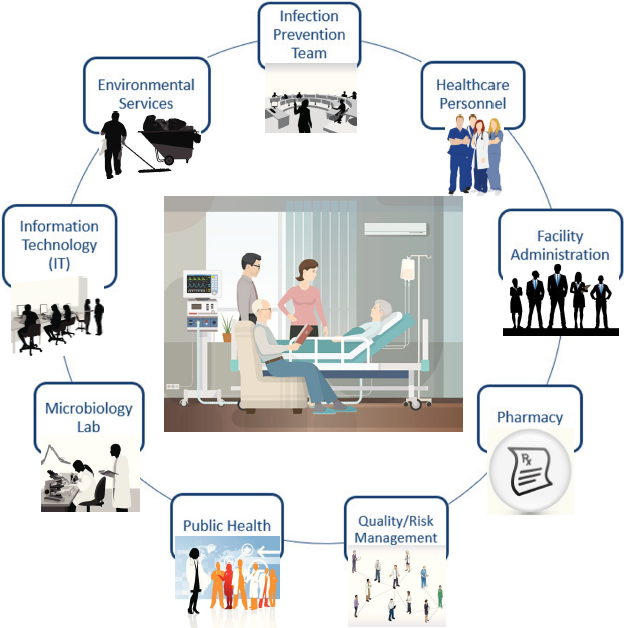
Hospitals coordinate efforts to prevent infection
- View the infographic below to see how many different groups of people in healthcare are involved in preventing infections
How Various Groups within a Healthcare Facility Contribute to Preventing Infection
| | |

|
|
 |
|
 |
|
 |
|
 |
|
 |
|
 |
|
 |
|
 |
|
Additional Resources
- The Joint Commission (TJC): Prevent Infections and Ask Caregivers to Wash Their Hands (PDF)
-
Association for Professionals in Infection Control and Epidemiology (APIC): Keeping Loved Ones Safe from Infection in Healthcare Facilities: Be a Good Visitor (PDF)
-
Centers for Disease Control and Prevention (CDC) Patient Safety: What You Can Do to Be a Safe Patient
-
APIC: Who Are Infection Preventionists? (PDF)
-
CDC: You’ve Been Prescribed an Antibiotic in the Hospital for an Infection