


foodborne illnesses and outbreaks
Food Safety Resources for Awareness and Outreach
The following resources, messages, and graphics are provided for local public health partners to use and share to help raise awareness about foodborne illness and promote food safety.
Food safety messaging can be shared year-round, but key times for awareness include:
-
 Warmer-weather months
 Many foodborne illnesses have a seasonal pattern, with many cases in California usually occurring during warmer-weather months, such as June, July, and August.
-
 Before or during holidays, food festivals, sporting events, and other local events when people come together to share and enjoy food
 September – National Food Safety Education Month
Graphics & Social Media Messages
Graphics may be co-branded with local agency information and can be used for social media, digital ads, or as embedded links on webpages. Click an image to view and download (right-click and select “Save image as”).
Food Safety Steps
Food Safety Steps (banner)
English | Spanish | Simplified Chinese | Vietnamese | Korean | Tagalog
Food Safety Steps (square graphic)
English | Spanish | Simplified Chinese | Vietnamese | Korean | Tagalog
Food Safety Steps (flyer template .DOCX)
- English | Spanish | Simplified Chinese | Vietnamese | Korean | Tagalog
| English | Spanish |
     
|
|

|
|


Food Safety (continued)
  | Suggested message: Practice the four steps of #FoodSafety! Step 1: Wash your hands and the surfaces where you prepare food with warm, soapy water before you begin cooking. Learn more: https://www.foodsafety.gov/keep-food-safe/4-steps-to-food-safety#clean |
  | Suggested message: Practice the four steps of #FoodSafety! Step 2: Keep raw meat, poultry, seafood, and eggs away from ready-to-eat foods like salad and deli meats. Germs from raw meat can easily spread to other food if you don’t keep them separate. https://www.foodsafety.gov/keep-food-safe/4-steps-to-food-safety#separate |
| Suggested message: Practice the four steps of #FoodSafety! Step 3: Heat food to the right temperature to kill any germs that can make you sick. Use a food thermometer to make sure meat has been fully cooked. Learn more: https://www.foodsafety.gov/keep-food-safe/4-steps-to-food-safety#cook |
  | Suggested message: Practice the four steps of #FoodSafety! Step 4: Refrigerate perishable food right away to prevent germs from growing. Germs can grow in food if left out at room temperature. Learn more: https://www.foodsafety.gov/keep-food-safe/4-steps-to-food-safety#chill |


Reporting Foodborne Illness
|
English |
Spanish |
 
|
Sus informes marcan la diferencia y pueden ayudar a evitar que otras personas se enfermen. Obtenga más información sobre las enfermedades y los brotes de origen alimentario: https://www.cdph.ca.gov/Programs/CID/DCDC/ |


Food-specific Messages (Eggs, Raw Dough, Oysters)
|
|
Suggested message: Happy Fry-day! Eggs can have germs called #Salmonella in them, so be sure to fully cook eggs or dishes made with eggs. Remember: Wash your hands and any surfaces that touch raw eggs so germs don’t spread. Get more #FoodSafety tips: https://www.fda.gov/food/buy-store-serve-safe-food/what-you-need-know-about-egg-safety |
  |
Suggested message: Say “no” to tasting raw dough. Raw flour and eggs in dough or batter can contain germs that can make you sick. Don’t risk it – wait to eat dough or batter until it’s fully cooked. Learn more: https://www.cdc.gov/food-safety/foods/no-raw-dough.html #FoodSafety #CookieDough |


|
Suggested message: Make sure to fully cook oysters and other shellfish before eating. Why? Raw or undercooked #oysters can be contaminated with bacteria that can cause a type of food poisoning called #vibriosis. Learn more: https://www.cdc.gov/vibrio/prevention/vibrio-and-oysters.html #FoodSafety #ShellfishSafety
|

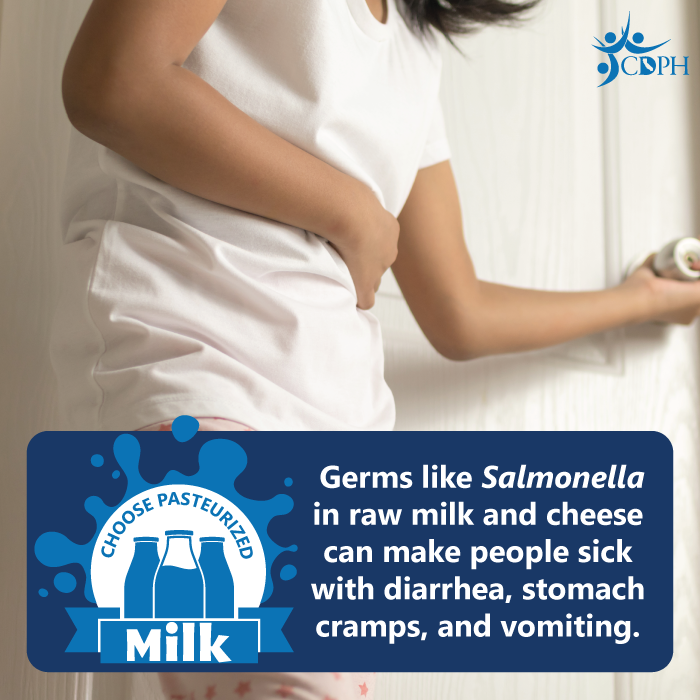
Raw Milk
| English |
Spanish |

#RawMilk #ChoosePasteurized #MilkSafety |

#LecheCruda #EscogePasteurizacion #LecheSaludable |

#RawMilk #ChoosePasteurized #MilkSafety |

#LecheCruda #EscogePasteurizacion #LecheSaludable |

#RawMilk #ChoosePasteurized #MilkSafety |

|
#RawMilk #ChoosePasteurized #MilkSafety |

#LecheCruda #EscogePasteurizacion #LecheSaludable |
#RawMilk #ChoosePasteurized #MilkSafety |
#LecheCruda #EscogePasteurizacion #LecheSaludable |

Raw Milk (continued)
 |
Suggested messages:
#RawMilk #ChoosePasteurized #MilkSafety |
 |
Suggested messages:
#RawMilk #ChoosePasteurized #MilkSafety
|
  |
Suggested messages:
#RawMilk #ChoosePasteurized #MilkSafety
|
Seasonal and Holiday Food Messages
 |
Suggested messages:
|
 |
Suggested messages:
|
  |
Suggested messages:
|
 |
Suggested message: After your holiday meal, make sure to put away leftovers in the refrigerator within 2 hours. Germs that can make you and your family sick can grow in food that is left out at room temperature. Take time to chill!
https://bit.ly/USDAFoodTemp |
 |
Suggested message: Some favorite holiday recipes may call for raw or lightly cooked eggs. But some raw eggs can have harmful bacteria in them called #Salmonella. To keep from getting sick, adapt favorite recipes to make sure eggs are fully cooked or pasteurized: https://bit.ly/FDASafeFoodServing #Eggnog |
 |
Suggested message: It may be tempting to sneak a taste of raw cookie dough this holiday season, but for your safety, wait to eat dough or batter until it’s fully cooked. Raw flour and eggs in cookie dough can contain germs that can make you sick. Learn more: https://www.cdc.gov/food-safety/foods/no-raw-dough.html #CookieDough |