




Norovirus
What is norovirus?
Norovirus is a virus (a type of germ) that is the most common cause of vomiting, diarrhea, and foodborne illness in the United States. The U.S. Centers for Disease Control and Prevention (CDC) has estimated that every year in the United States norovirus causes:
19 to 21 million illnesses
2,270,000 outpatient clinic visits annually, mostly in young children
465,000 emergency department visits, mostly in young children
109,000 hospitalizations
900 deaths, mostly among adults aged 65 years and older
Norovirus is very contagious, meaning it spreads quickly and easily between people. Norovirus can spread quickly in places such as schools, shelters, jails/prisons, camps, hospitals, nursing homes, and cruise ships.
Illness from norovirus is sometimes called the “stomach bug” or “stomach flu,” but it is not related to flu viruses, which mainly cause respiratory symptoms (such as coughing and lung infection).
How can someone get norovirus?
Norovirus is in the vomit and stool (poop) of a person who is infected. When a person who has norovirus vomits (throws up), norovirus can spray into the air and land on nearby surfaces and objects. Norovirus can also spread when diarrhea gets onto surfaces. Unwashed hands can spread norovirus to other surfaces and even contaminate food. Norovirus can survive for weeks on surfaces and objects, such as countertops, doorknobs, phones, and furniture, or any items that may have been in contact with vomit, diarrhea, or unwashed hands of someone sick with norovirus.
People can get norovirus in many ways, including by:
-
Touching, caring for, or sharing food or objects with a person who is sick with norovirus, including changing the diapers of a person who has norovirus
-
Eating or drinking something that has norovirus in it, such as food touched by a person who is sick with norovirus, or undercooked shellfish (such as oysters) grown in contaminated water
-
Touching something contaminated with norovirus and then touching their mouths or food before washing their hands
-
Sharing the toilet or bathroom with someone who is sick with norovirus
-
Accidentally swallowing water that has norovirus in it, including water in swimming pools and other recreational water areas
-
Cleaning up vomit or diarrhea without wearing protective gear, such as gloves and a face mask
Anyone can get norovirus, even if they’ve had it before.
What should I do if I think I have norovirus?
If you are sick with vomiting or diarrhea, it’s important that you:
-
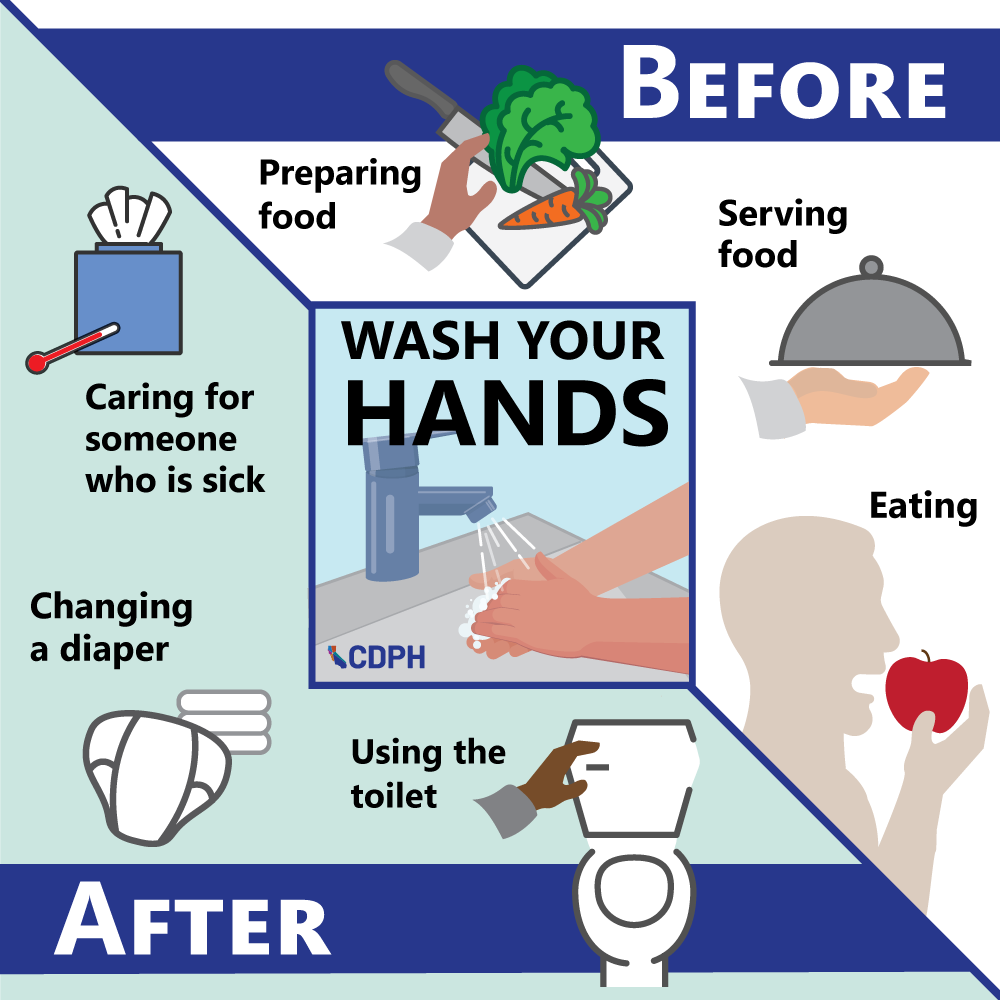
Wash your hands often with soap and water, especially after using the toilet – hand sanitizer does not work well to kill norovirus.
-
Do NOT cook, prepare, or serve food for others while you are sick and for at least 2 days after you feel better.
-
Clean and disinfect the surfaces around you to prevent the spread of germs to others.
-
Stay out of recreational water areas, including swimming pools, splash pads, and backyard kiddie pools.
-
Drink plenty of fluids so you don’t get dehydrated (diarrhea and vomiting can make you lose fluids/water quickly). If you have symptoms of severe dehydration, talk to a doctor or healthcare provider.
If possible, taking these additional steps while you are sick (and for 2 days after symptoms stop) can help protect the people around you and prevent the spread of norovirus:
-
Stay away from people or household members who are more likely to get very sick from norovirus, including older adults (65+), young children (less than 5 years old), and those with weakened immune systems because of medical conditions.
-
Staying in a separate room and using a separate bathroom can help prevent the spread of germs to the people you live with.
-
Do NOT go to school or work, especially if you work in a job that involves serving or taking care of others in places where groups of people live or stay (such as a hospital, nursing home, school, camp, jail/prison, or cruise ship).
If you think you got norovirus from food, report it to your local health department. Your report can help local health departments investigate foodborne outbreaks and prevent more people from getting sick.
Learn more about how you can help with foodborne outbreak investigations
Cleaning and Disinfecting
If you or someone in your household is sick with norovirus, it’s important to clean and disinfect areas where someone has vomited or had diarrhea. Cleaning with soap and water removes germs from surfaces, while disinfecting kills any remaining germs.
Disinfectant products are available at local stores. To make sure you’re using a product that works to kill norovirus, you can:
-
Check the product label to see if it lists “norovirus” as one of the germs it kills.
-
Look for an EPA registration number (“EPA Reg. No.”) on the product label, and search for that number in EPA’s List G – Registered Antimicrobial Products Effective Against Norovirus.
Steps to Clean Up Vomit and Diarrhea:
First, put on disposable gloves and a face mask to help keep norovirus off your hands and out of your mouth.
Use paper towels to wipe up any visible vomit or diarrhea. Throw away used paper towels in a plastic trash bag.
Disinfect the area by spraying a disinfectant or bleach solution (made according to instructions on the label). Let the disinfectant sit for at least 5 minutes to kill norovirus.
Clean the entire area again with soap and warm water.
Remove disposable gloves and mask and throw them away. Then take out the trash.
Finally, wash your hands with soap and water.
Laundry
Using disposable gloves and a face mask, remove and wash all clothes and linens that may have vomit or poop on them. Be careful to handle items without shaking them. Wash clothes with hot water and laundry detergent, then dry clothes on the highest heat setting.
Wash your hands with soap and water after handling dirty clothes.
What can I do to protect my family and myself from getting norovirus?
What is the California Department of Public Health doing about norovirus?
The California Department of Public Health (CDPH) and local health departments (LHDs) track outbreaks of norovirus. Healthcare providers are not required to report individual cases of norovirus to their LHDs, but they are required to report outbreaks. When outbreaks of norovirus are reported, CDPH and LHDs will investigate to find the cause of the outbreak, prevent further infections, and educate the public.
A person who is infected with norovirus can shed it in their feces (poop), which means norovirus can be found in wastewater (also called sewage). Wastewater samples are collected at the wastewater treatment facility (before the wastewater is treated) and tested for norovirus. These samples come from wastewater flowing from the entire community, not from individual people. The level of norovirus found in wastewater can help alert public health officials to an increase of cases or a potential outbreak and help with control efforts.
- For more information about wastewater and testing for norovirus, see Wastewater SCAN Frequently Asked Questions.
- For general information about wastewater surveillance, see CDPH’s Wastewater Surveillance Toolkit.
- CDPH Norovirus Fact Sheet (PDF)
-
CDPH Foodborne Illnesses and Outbreaks
- CDC Norovirus
-
How Norovirus Spreads
- How to Prevent Norovirus
- Norovirus Outbreaks
- Norovirus Facts and Stats
-
Norovirus: Facts for Food Workers (PDF, 6.7MB)
- Tips for Healthy Cruising
- Cruise Ship Illness Frequently Asked Questions
CDC How to Clean and Disinfect Early Care and Education Settings